or drag and drop an image here
Singapore’s coffee culture is a beautiful blend of tradition and innovation, where the comforting kopitiams coexist with modern specialty cafes. This mix captures the city’s rich heritage while embracing fresh ideas, creating a coffee scene that feels both familiar and exciting.
The Evolution of Coffee Culture in Singapore’s Cafe Scene
For years, kopitiams have been the heartbeat of Singapore’s coffee life. These humble spots serve local kopi made from robusta beans roasted with sugar and margarine, delivering a strong, aromatic brew that’s deeply comforting. It’s where locals gather over simple staples like kaya toast, ham, and soft-boiled eggs with freshly toasted bread. The scent of kopi brewing and the hum of lively chatter form a morning ritual that’s hard to beat.
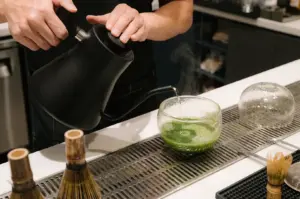
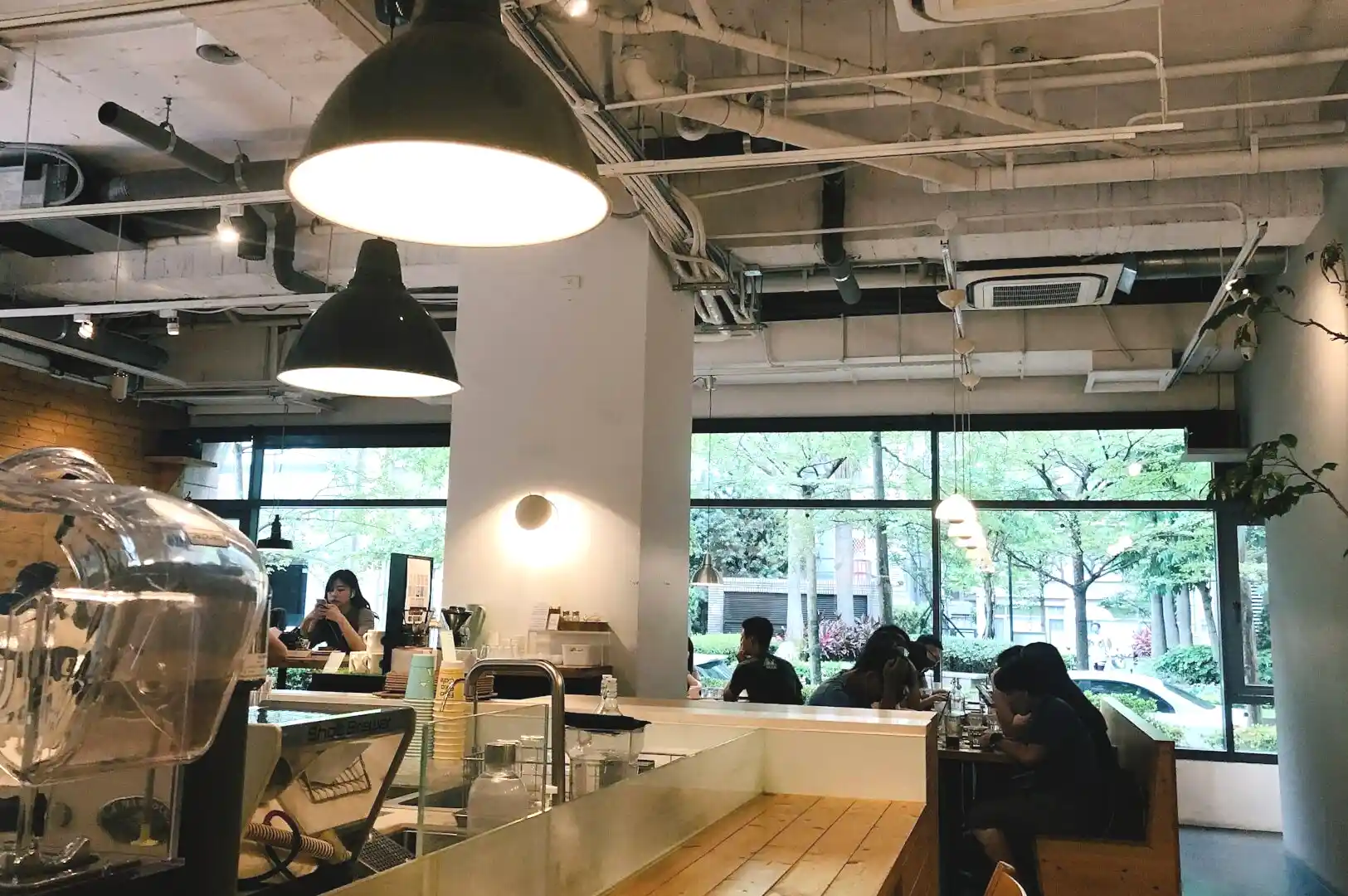
Recently, specialty cafes have been reshaping the scene. These places spotlight high-quality arabica beans and precise brewing techniques. They often share tasting notes, inviting you to explore the layers of flavour in each cup. Yet, many still honor local tastes by weaving in ingredients like pandan, gula melaka, and kaya, crafting drinks and desserts that feel both nostalgic and new.
The Old Coffee Still Waiting in Singapore
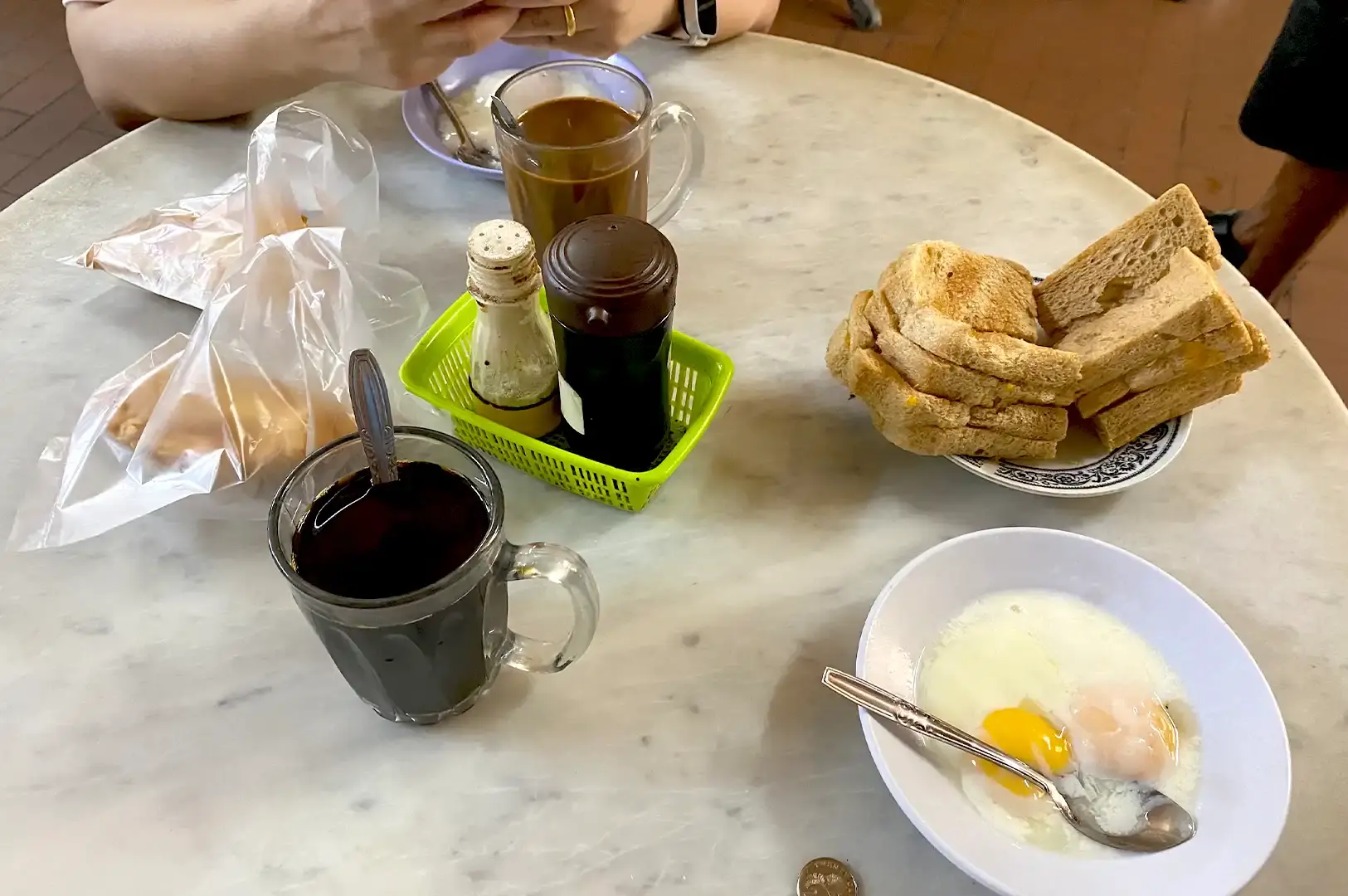
There’s a particular sound to an old kopitiam morning.
The clatter of a metal spoon against a thick porcelain cup. The hiss of a kettle that’s been boiling since before dawn. Somewhere, an uncle reading the papers, folding them into quarters, taking his time.
I grew up on this. Most of us did.
Before the flat whites and the single-origin pour-overs, before specialty coffee took over the conversation, there was just kopi. Dark, strong, sweetened with condensed milk, poured from a height into a cup that had seen a thousand mornings.
This is a small guide to five places where that coffee still waits. Not the trendiest. Not the most photographed. Just the ones that kept the old ways, quietly, while the city changed around them.
If you care about traditional coffee in Singapore — the real coffee culture, not the version arranged for a feed — start here.
What Makes Traditional Kopi Different
Before the cafes, a word on the coffee itself.
Singapore coffee isn’t like the beans you’ll find at a modern roastery. Where specialty coffee leans on lighter arabica beans and careful extraction, traditional kopi is built on robusta beans — cheaper, bolder, with that deep bitter aftertaste locals came to love.
The coffee preparation is its own craft. Beans roasted with sugar and sometimes margarine until dark and glossy. Brewed through a cloth sock filter, thick and slow. Then poured over condensed milk or evaporated milk, depending on your order.
The language matters too. A kopi o is black coffee with sugar, no milk. Kopi c uses evaporated milk instead of condensed. Ask for siew dai and you’ll get less sugar — the quiet order of someone who wants to taste the beans, not the sweetness.
That’s the grammar of a cup of kopi. Once you know it, every kopitiam opens up.
Heap Seng Leong – Where Time Simply Stopped
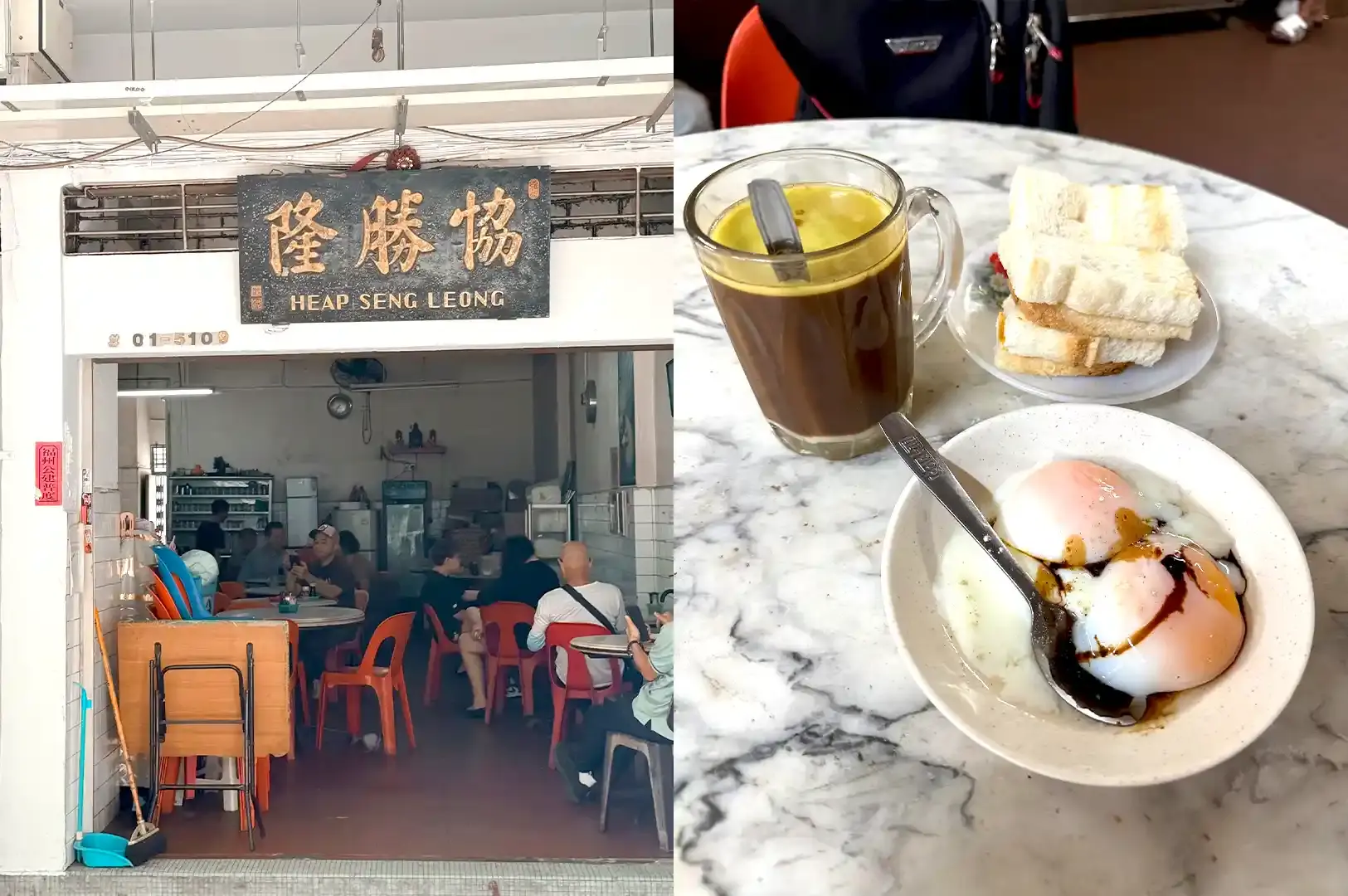
A Step Back in Time
You walk into Heap Seng Leong and the year falls away.
The place has kept its 1970s bones — worn tiles, old marble tables, a ceiling stained by decades of steam. Nothing here has been renovated for effect. It’s just old, honestly old, and there’s a dignity in that.
Kopi Gu You Specialty
This is the home of kopi gu you — kopi gu, coffee with a small dollop of salted butter melting on top.
I remember my first taste. The butter turns the coffee round and soft, a richness that coats the tongue. It sounds strange until you try it. Then it makes a quiet kind of sense — like the drink was always meant to be this way.
The Experience
The uncle who runs it moves slowly, deliberately. He’s been making this same coffee longer than most cafes have existed. You don’t rush him. You sit, you sip, you let the morning hold still for a while.
There’s no menu theatre here. Just kopi, toast, and time.
Chin Mee Chin Confectionery – The Charcoal Still Glowing
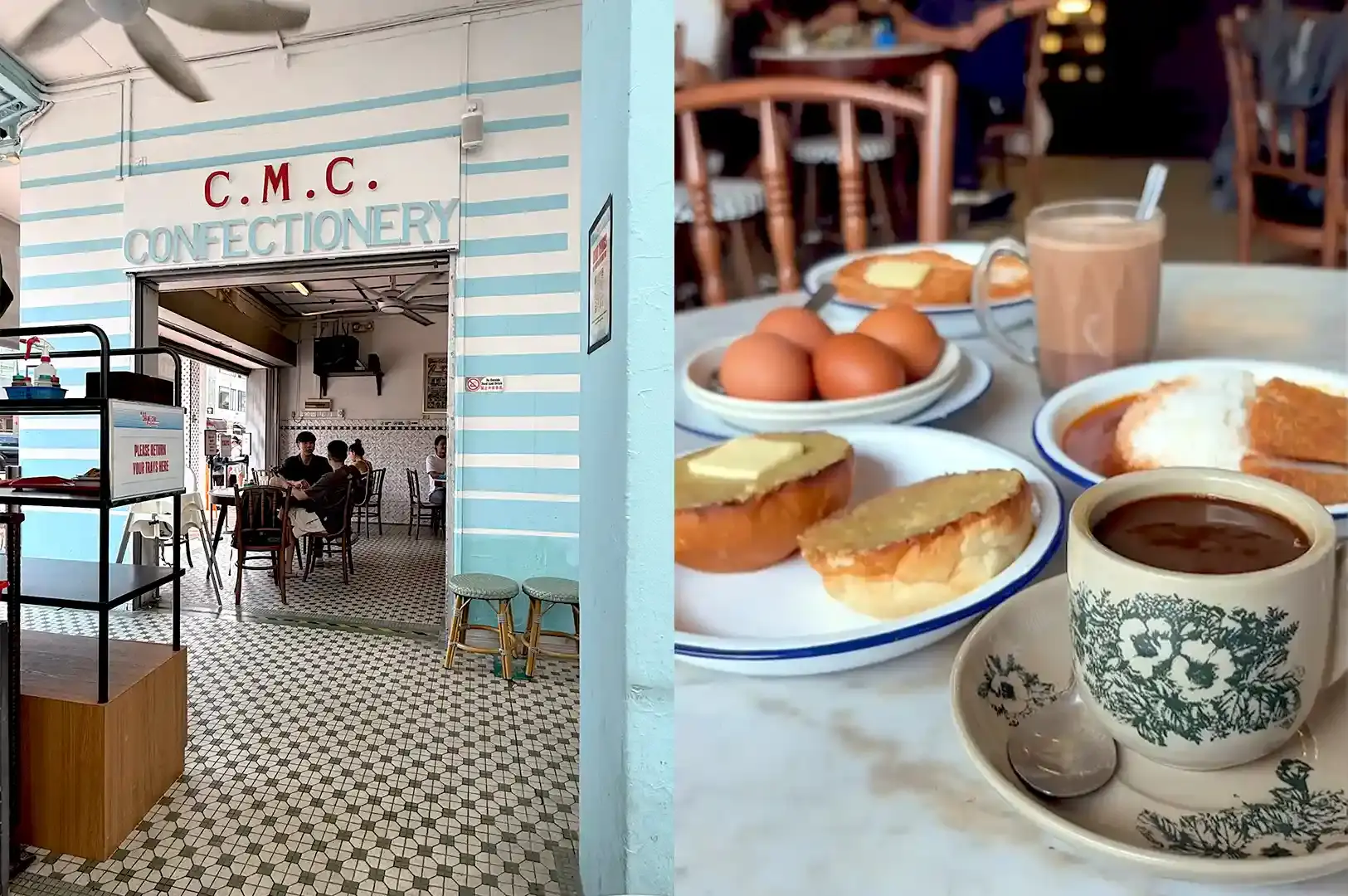
A Place Steeped in History
Some places carry their history in the walls.
Chin Mee Chin has been open since 1925, and you feel every one of those years the moment you step onto the old mosaic tiles. The ceiling fans turn slow. The display cases hold pastries baked in house, the same recipes passed down through generations.
Charcoal Grilled Kaya Toast
But it’s the kaya toast that people come back for.
This is charcoal grilled toast — real charcoal, not a toaster. The bread comes out with a smoky edge you simply can’t fake, crisp at the corners, warm through the middle. Spread with kaya and a cold slab of salted butter, it’s the kind of thing that tastes like a childhood you might not have even had.
The Perfect Breakfast Pairing
Pair it with their local kopi and a plate of soft boiled eggs. Crack the eggs into a saucer, add a splash of dark soya sauce and a shake of pepper, and dip the toast straight in.
It’s messy. It’s meant to be.
I’ve eaten this exact breakfast since I was small. It still reminds me of home.
Keng Wah Sung Cafe – Geylang's Quiet Keeper
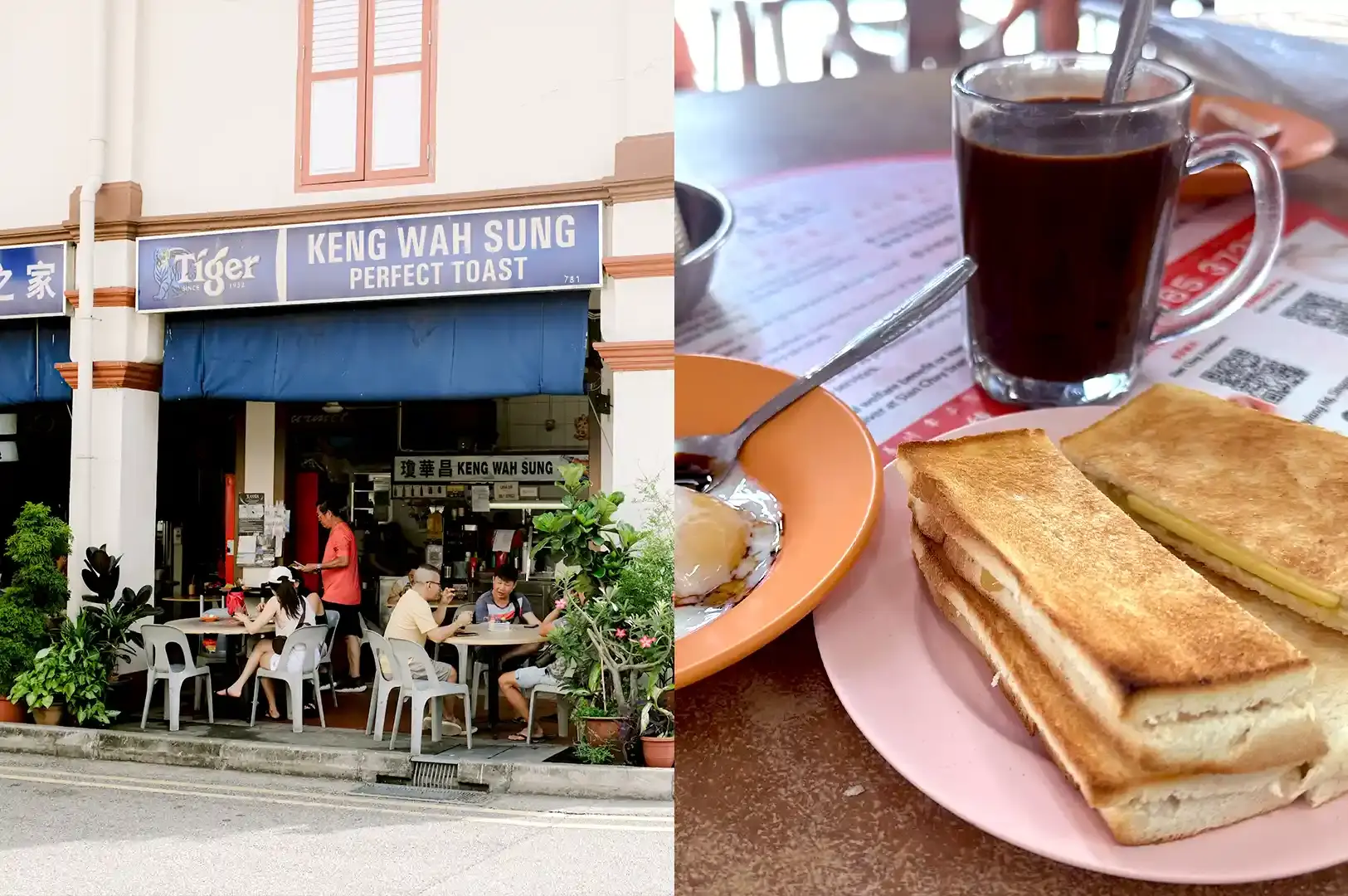
Early Riser’s Haven
Geylang wakes up differently.
By the time most of the city is stirring, Keng Wah has already been open for hours, serving the night-shift workers and the early risers who’ve known this corner for decades. It’s one of the oldest traditional coffee shops in the area, and it wears that age plainly.
Bold Traditional Kopi
The kopi here is robust — thick, dark, unapologetic. This is the kind of black coffee that doesn’t ask to be liked. It simply is what it is, brewed the old way, poured without ceremony.
Simple Yet Satisfying
Their kaya toast holds up beside it, and the steamed bread is worth trying too — soft, pillowy, spread thick with kaya and butter. A gentler cousin to the crisp toast, meant for slower chewing.
Keng Wah isn’t polished. The tables are close, the fans clack, and the coffee comes fast. But there’s honesty in a place that doesn’t perform for anyone. You come for the coffee. It delivers. That’s the whole arrangement.
YY Kafei Dian – The Beach Road Regular
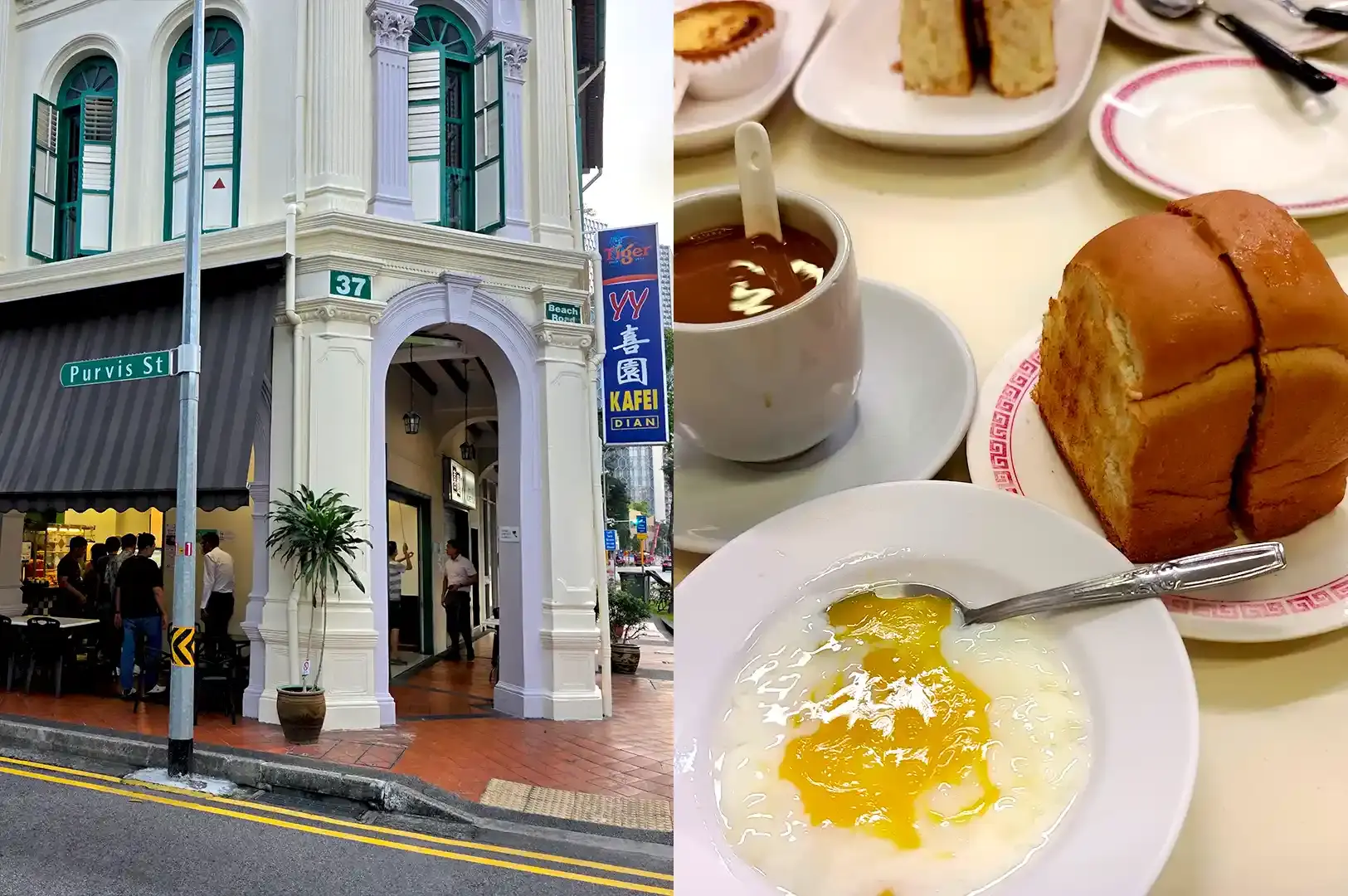
37 Beach Road, #01-01
Popular Local Spot
There’s always a small crowd at YY Kafei Dian, and there’s a reason.
The Hainanese-style coffee here is fragrant in a way that lingers — brewed strong, sweetened just right, the sort of cup that makes you slow down without meaning to. For many regulars, this is their favourite kopi, the one they measure others against.
Must-Try Kaya Buns and Chicken Rice
But the real draw is the kaya buns and their classic chicken rice, which pairs perfectly with kopi. Freshly baked, warm, split and filled with kaya and butter that melts into the soft crumb. They also do a proper French toast and a range of toast sets — the kind of unfussy fun toast breakfast that fills you without fanfare.
A Neighbourhood Staple
I like coming here on a weekday morning, before the office crowd descends. You order at the counter, find a table, and wait for a tray of toast and a cup of coffee that costs less than a fancy latte and gives you twice as much comfort.
It’s not trying to be a destination. It’s just very good at being what it is — a neighbourhood kopitiam that never lost its touch.
Ya Kun Kaya Toast – The One We All Grew Up With
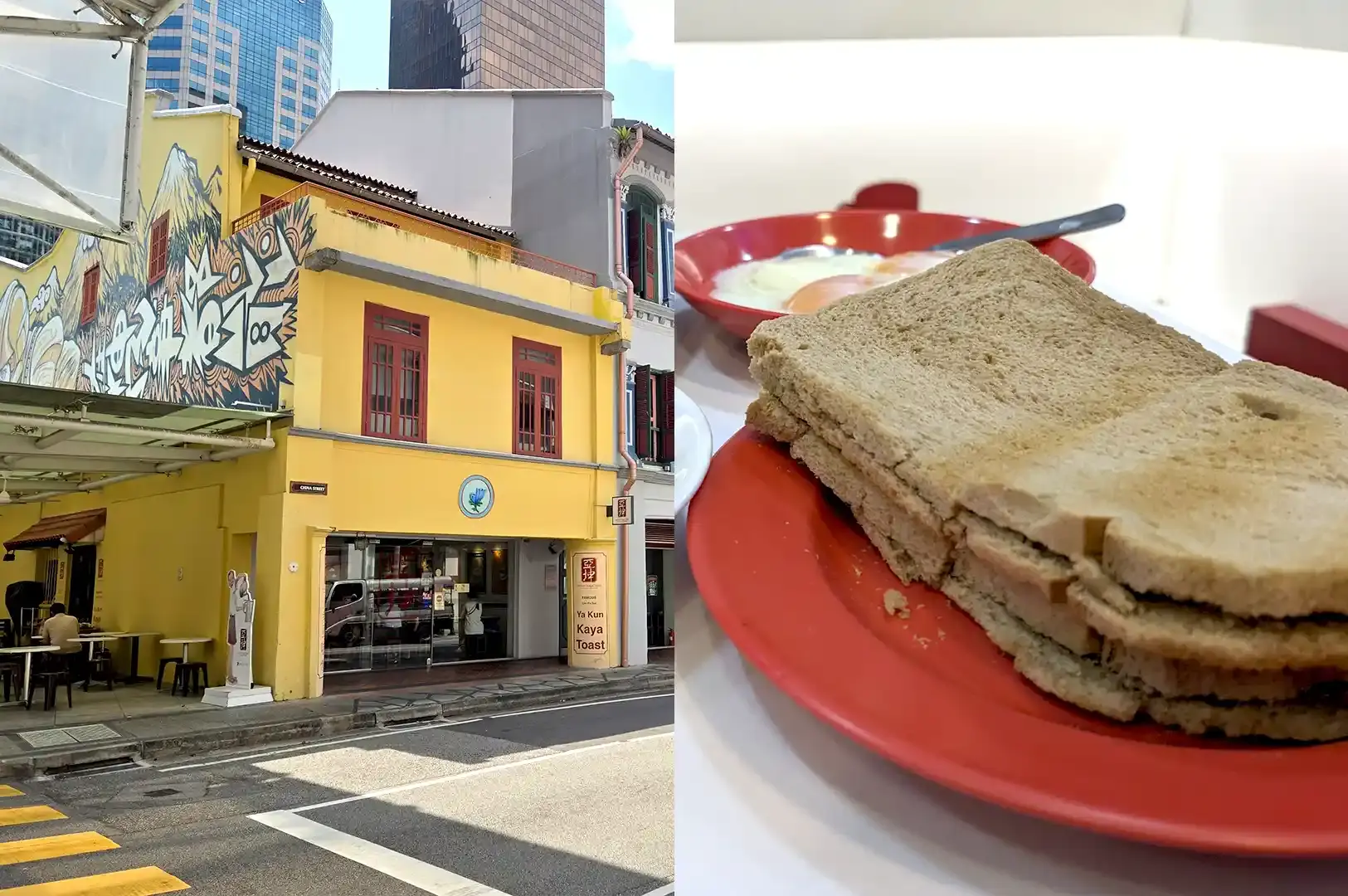
Multiple locations, including Far East Square, 18 Telok Ayer Street
A Household Name
You can’t write about traditional coffee in Singapore without Ya Kun Kaya Toast.
It started in 1926 as a modest kaya toast stall, and grew into a name many Singaporeans know and love. There are outlets everywhere now — in malls, in office buildings, tucked into the ground floors of iconic buildings across the island. Some are compact kiosks. Others have room to sit.
Classic Breakfast Set with Gula Melaka Kopi
The set breakfast is the heart of it. Thin, crisp kaya toast with a slab of cold butter. Two soft boiled eggs. And a cup of traditional kopi, pulled the old way. Their gula melaka kopi is a must-try — sweet, rich, and layered with the unique caramel notes of gula melaka, a true local beverage delight.
Consistency and Comfort
Yes, it’s a chain. Yes, you’ll find one near almost any hawker centre or shopping mall. But there’s something reassuring in that consistency. The Ya Kun kaya toast you eat in Tampines Mall tastes like the one you had years ago somewhere else entirely.
That’s not a small thing. In a city that changes fast, a breakfast that stays the same is its own quiet comfort.
It’s the everyday version of this heritage — the accessible door into a much older tradition.
Neighbourhoods to find Cafes in Singapore:
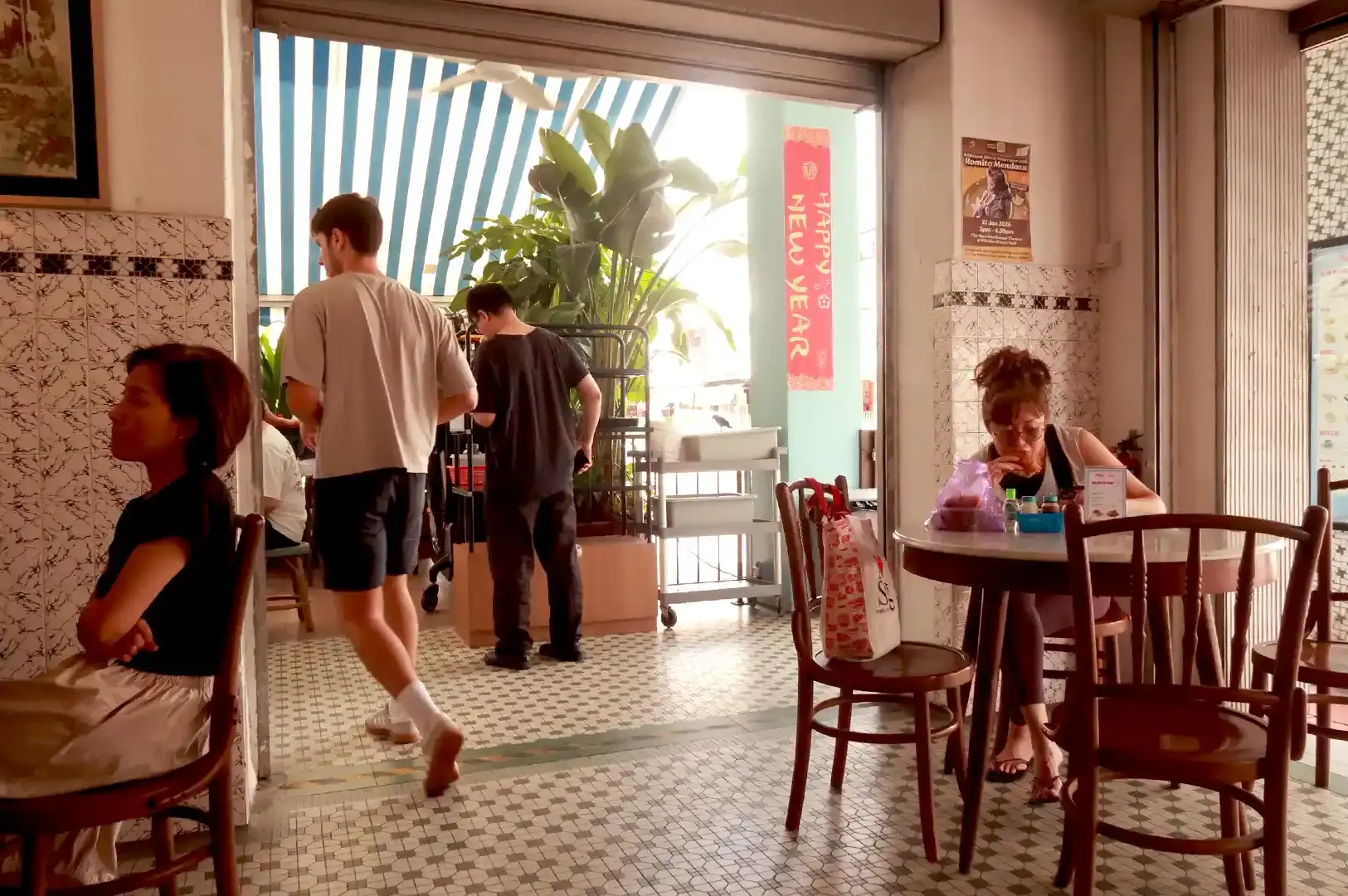
Across Singapore’s neighbourhoods, cafes range from small home based business ventures blossoming into beloved spots to established favourites in Clarke Quay and Tanjong Pagar. These places serve both local kopi and specialty brews, with menus usually priced affordably. Whether it’s breakfast, brunch, lunch, or a late-night coffee, there’s something to savour. Just a heads-up: weekends can get busy, so a little patience might be part of the experience.
Clarke Quay Cafes: Cool Decor, Rich Flavours, and Fresh Air
Clarke Quay’s cafes buzz with energy. It’s where locals and diners come to enjoy a meal or simply relax with a well-crafted coffee. You’ll find everything from traditional kopi to creative espresso drinks made by skilled baristas. The food leans into comforting favourites, with dishes like crispy chicken sandwiches or chilled truffle capellini served alongside fresh bread. Many spots offer outdoor seating to soak up fresh air and sun, as well as cosy indoor corners adorned with potted plants—a welcoming place to linger.
Tanjong Pagar: A Hub for Local Kopi and Specialty Brews
Tanjong Pagar blends the old and new beautifully. Traditional kopitiams sit alongside modern cafes serving specialty and cold brews. It’s common to enjoy local kopi paired with brunch dishes like fried chicken french toast or savoury plates such as ham and eggs or chilled truffle capellini. The cafes here often feature sunlit floors and thoughtful decor, inviting guests to savour drinks and treats like pistachio raspberry croissants or chocolate cakes. Many places showcase house specialties reflecting the area’s cultural mix. These tucked-away coffeehouses are definitely worth discovering.
Tips for Visiting Cafes in Singapore
Check opening hours before you go; some specialty cafes have specific times or close early certain days.
For a relaxed brunch or lunch, Clarke Quay or South Bridge Road cafes offer great atmospheres and thoughtful menus.
Don’t hesitate to try local favourites alongside your coffee, like kaya toast or the adventurous fried chicken french toast.
Pause to savour the aroma and flavour of your coffee, appreciating the care poured into every cup.
Many cafes serve teas and cold brews if you want something lighter or refreshing on a sunny day.
Expect some waiting during busy times, especially weekends, as the best cafes attract crowds.
Conclusion
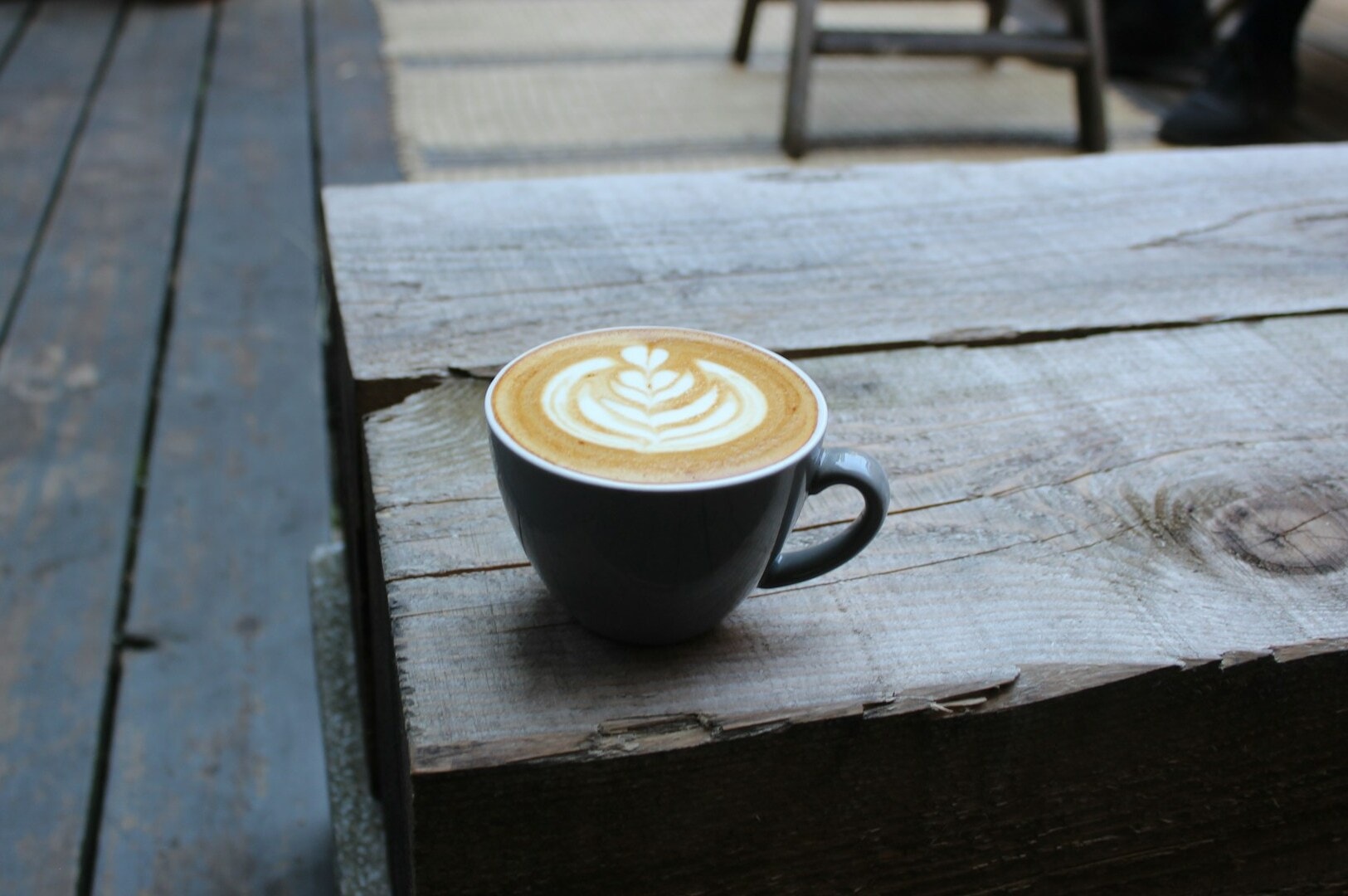
Singapore’s cafe scene is a lively mix of tradition and modernity, where kopitiams and specialty cafes sit side by side with ease. From Chinatown’s bustling streets to the trendy corners of Tanjong Pagar and Clarke Quay, there’s always a new cup to discover and enjoy.
Whether you’re local or visiting, exploring these cafes offers a chance to connect with Singapore’s culture and local flavours. So find a cosy spot, order your coffee, and soak in the vibrant scene this city has to offer.
For more articles like this, be sure to explore our golden list article on award worthy cafes in Best Cafes Singapore for the latest insights and recommendations.